The craft
Slow on purpose.
Good bread can't be hurried, and neither can good coffee. Here's what actually happens between the flour sack and your table, and why it takes as long as it does.
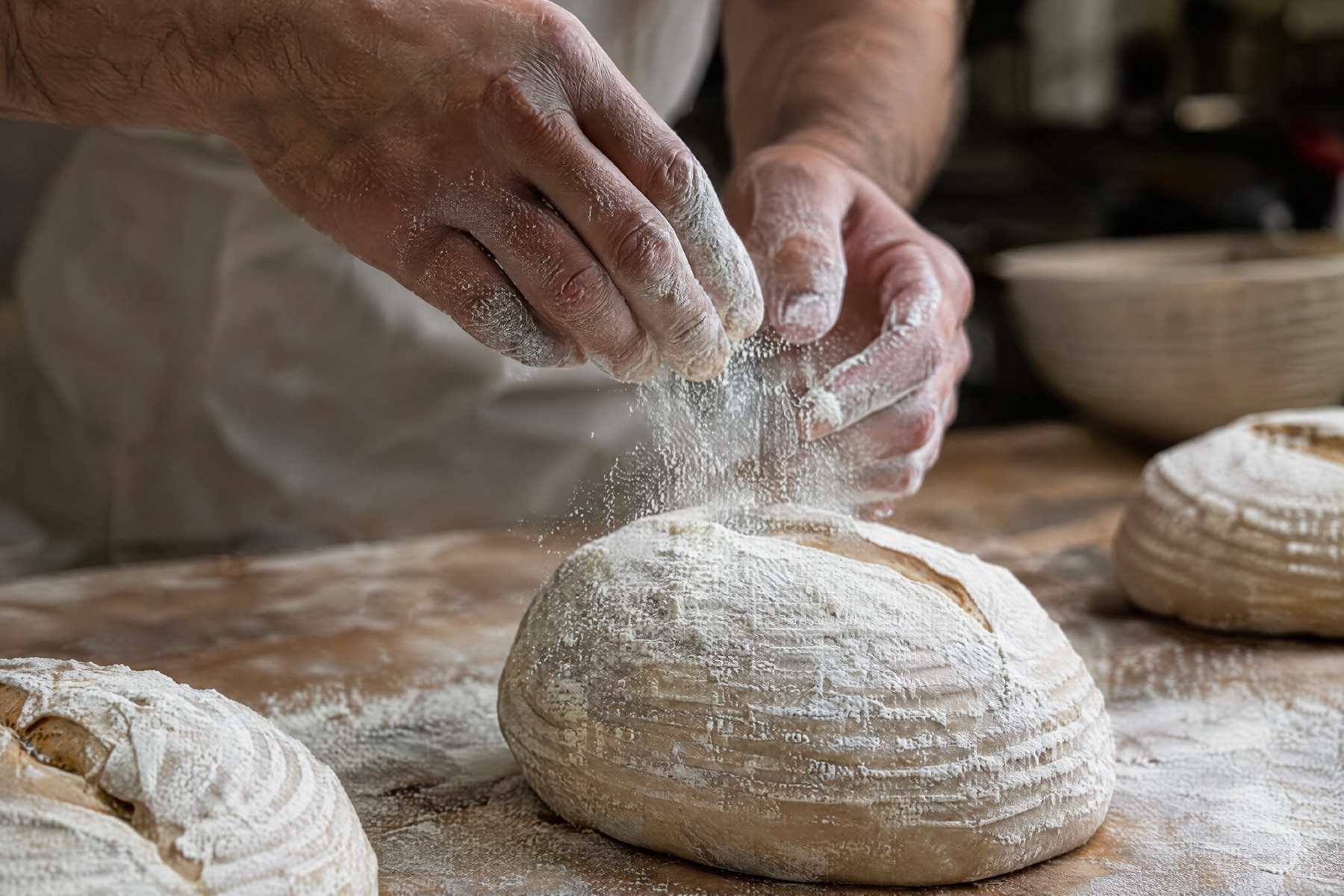
Long fermentation
Forty-eight hours, start to crust.
Commercial loaves can go from mix to shelf in about three hours. Ours take two days. That time is where the flavour comes from, and why the loaf still tastes good on day four.
- Day one, 6am
Feed the starter
Our starter is a living culture of wild yeast and bacteria, fed flour and water twice a day. It's what makes the bread rise, with no commercial yeast at all.
- Day one, noon
Mix and rest
Stone-milled flour, water, salt and starter. Then we leave it alone for an hour so the flour can fully absorb the water before any kneading.
- Afternoon
Fold, by hand
Four sets of gentle folds over three hours build strength without a mixer tearing the dough. You can feel it change from shaggy to silky.
- Overnight
Shape and cold-proof
Shaped loaves rest in linen-lined baskets at 4°C for 14 to 18 hours. The cold slows the yeast and lets the slow, tangy flavours develop.
- Day two, 5am
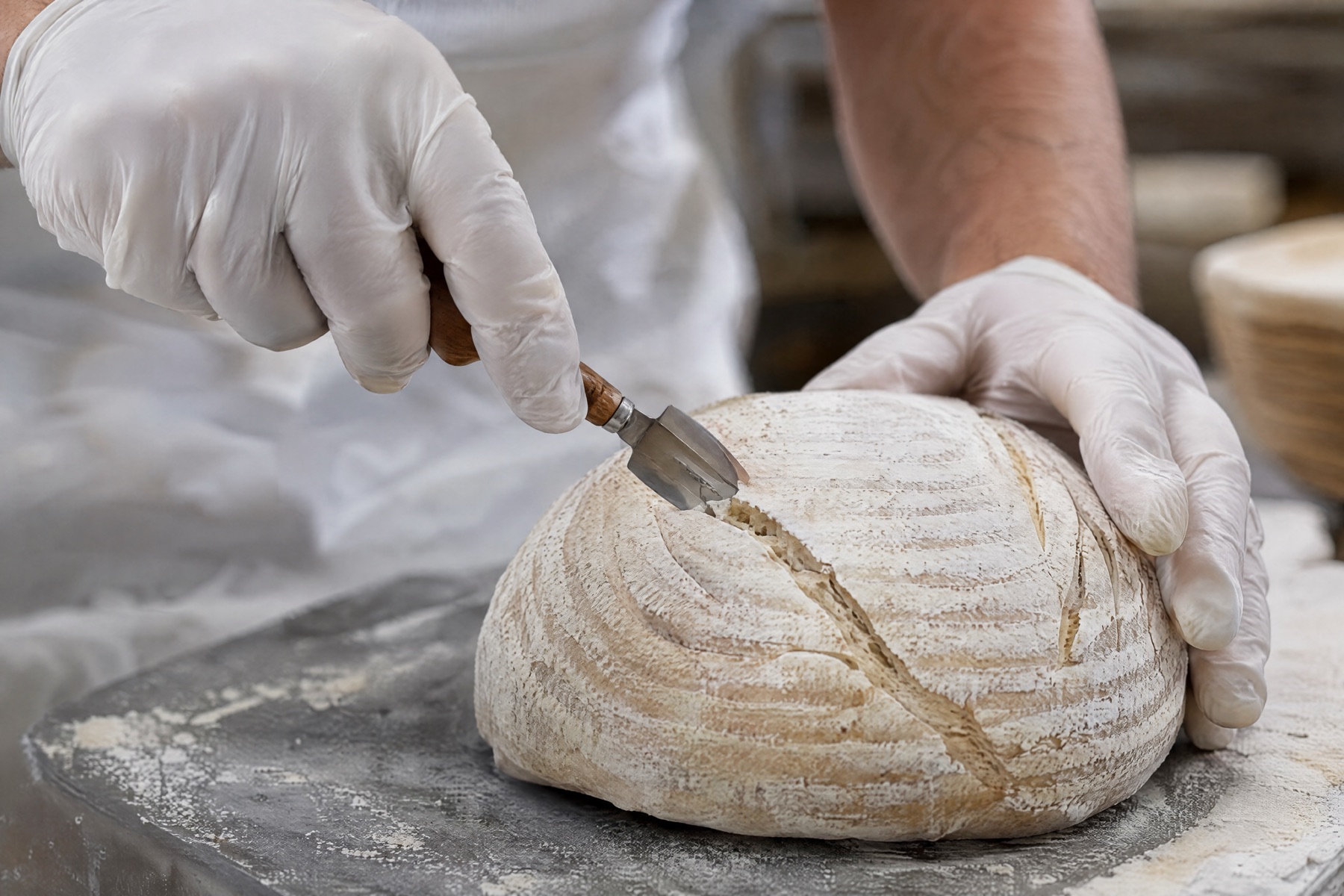
Score and bake dark
Each loaf is scored with a blade, then baked on stone with steam until the crust is deep amber. Pale crust is missed flavour, so we bake it bold.
Ingredients
Four ingredients. No shortcuts.
Our bread is flour, water, salt and starter. No dough conditioners, no added sugar in the sourdough, no preservatives. Whole-grain flour is stone-milled from regional growers, which keeps the bran and germ (and the flavour) in.
Butter for the pastry is cultured and high in fat, which is what gives a croissant clean, distinct layers instead of a bready middle.
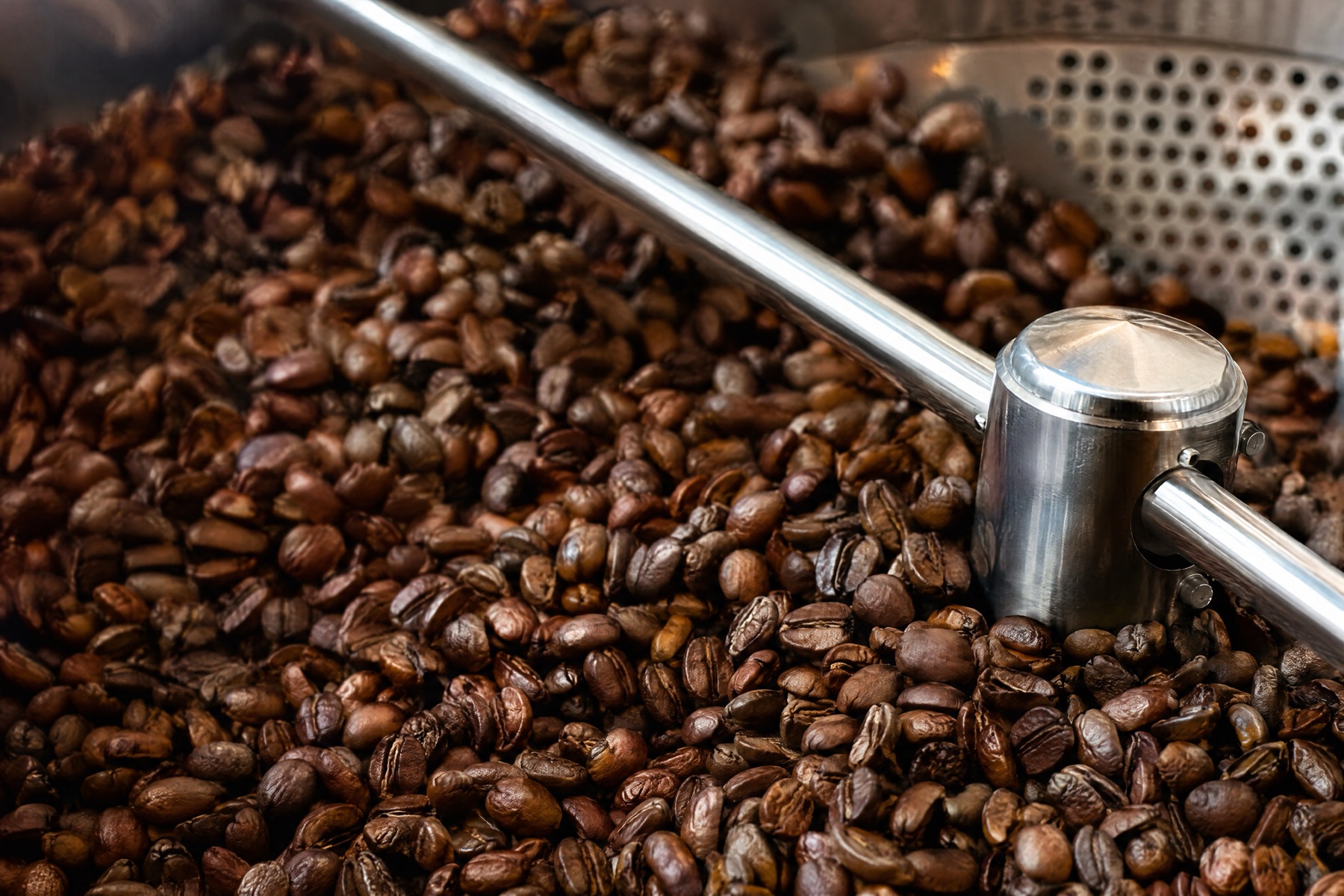
Small-batch roasting
Mondays belong to the roaster.
When the ovens are off, the roaster is on. We roast in small batches so nothing sits on a shelf for months, and each batch is tasted before it's bagged.
Then we wait. Espresso beans rest for five to seven days so the gas settles and the shot pours sweet and even. Filter coffee rotates with whatever single origin is tasting best.
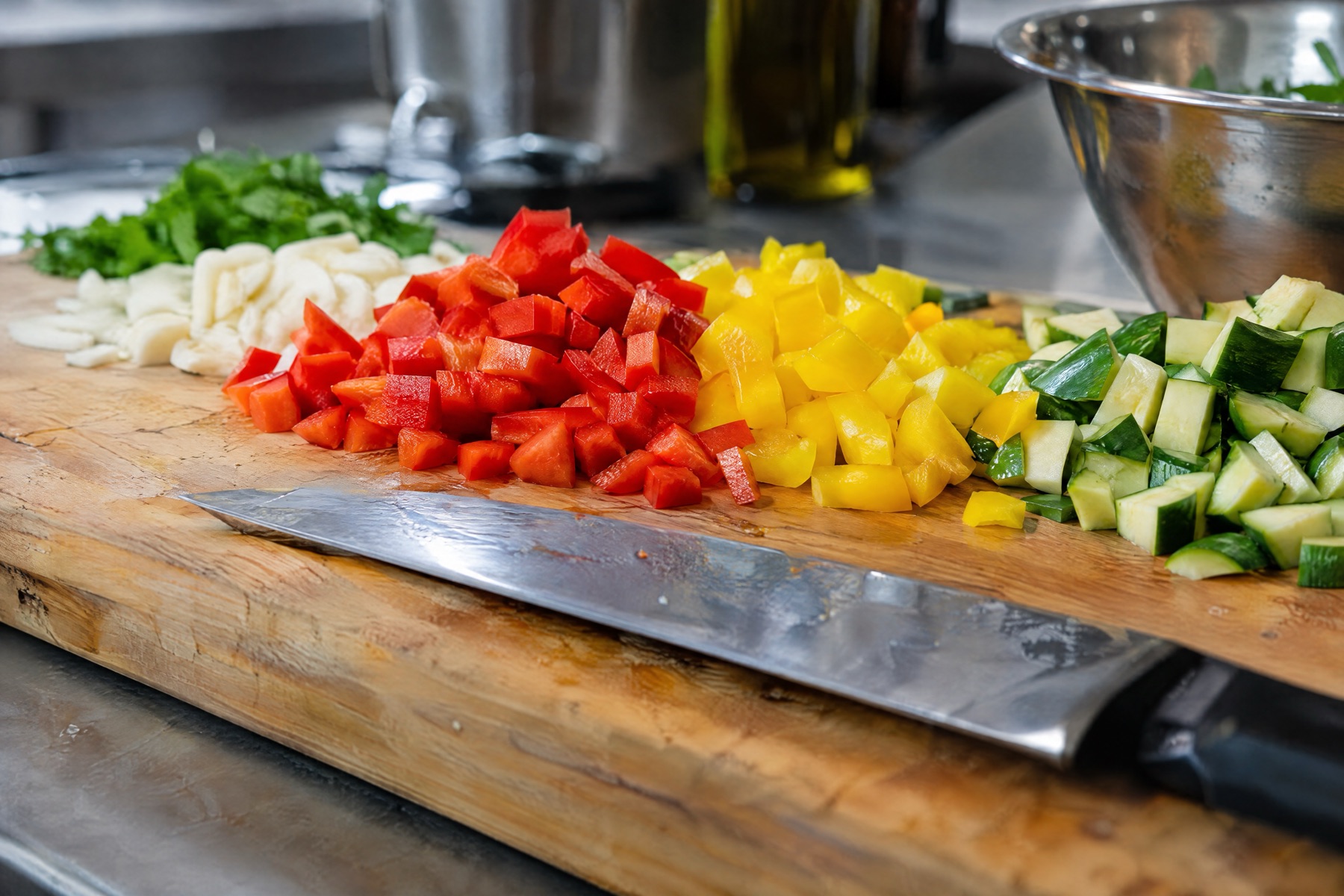
The weekend kitchen
Same flour, different shape.
Pasta night grew out of a simple idea: the flour that makes great bread makes great pasta too. On Friday and Saturday afternoons the bench is cleared, the dough is rolled by hand and vegetables from the morning market are prepped for the evening.
The menu is short because everything on it is made that day. When something runs out, it's gone until next weekend.
See a typical pasta night menuWhat you can count on
Our promises, in writing.
Baked today, or not on the shelf
Bread and pastry are sold the day they're baked. The only exception is the twice-baked almond croissant, and we tell you that.
Pre-orders made right
If your order isn't what you asked for, we'll replace it from the shelf or refund it on the spot. No forms.
Clear prices
Cake prices are listed by size. Extras like fresh flowers are quoted before you pay a deposit, never after.
Nothing wasted
Unsold bread goes to the neighbourhood pantry each afternoon. Day-old croissants become almond croissants.
Questions
Good to know.
Is sourdough easier to digest?
Which breads are vegan?
How should I store a loaf?
Do you supply cafés or restaurants?
Can I buy some of your starter?
Taste the two days for yourself.
Pre-order tonight by 8pm and your loaf will be boxed with your name on it from 8am tomorrow.